

Startups’ economic outlook improved in the second quarter. Expectations for the broader economy strengthened in particular, although recruitment expectations weakened slightly. More than half of startups are actively planning to establish a permanent presence abroad within the next year, while nearly 80 per cent are at least considering it.
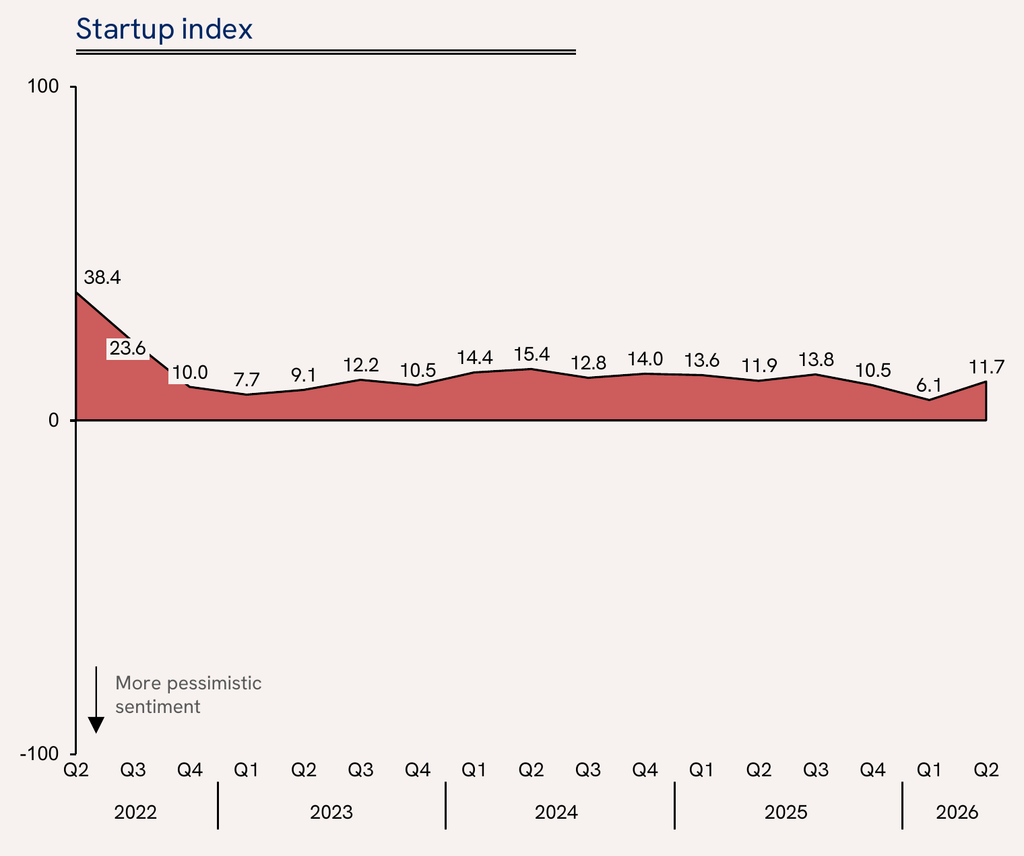
The latest Startup Barometer (Q2/2026) shows that the outlook among startups has improved since the beginning of the year. The Startup Index, which reflects startups’ overall confidence, rose to 12 from 6 in the first quarter. The index is the average of the Barometer’s six key balance scores.
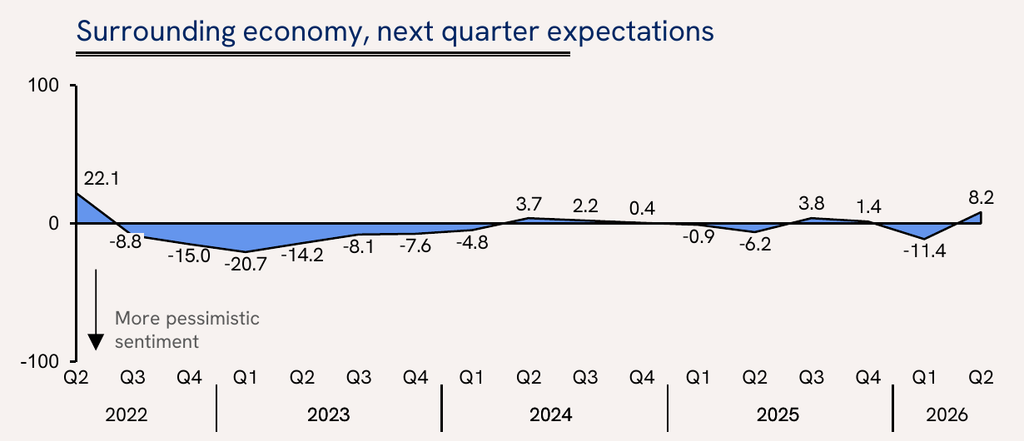
The clearest change was in expectations for the broader economy. The balance score for the next three months rose from -11 to 8, returning to positive territory. Startups’ assessments of their own financial position also improved.
“The decline in the first quarter appears, at least for now, to have been short-lived. The clearest change can be seen in expectations for the broader economy, which have returned to positive territory. However, it is still too early to speak of a lasting turnaround based on a single quarter,” says Amir Hassan, Economist at the Finnish Startup Community.
Startups’ financial position and expectations strengthened
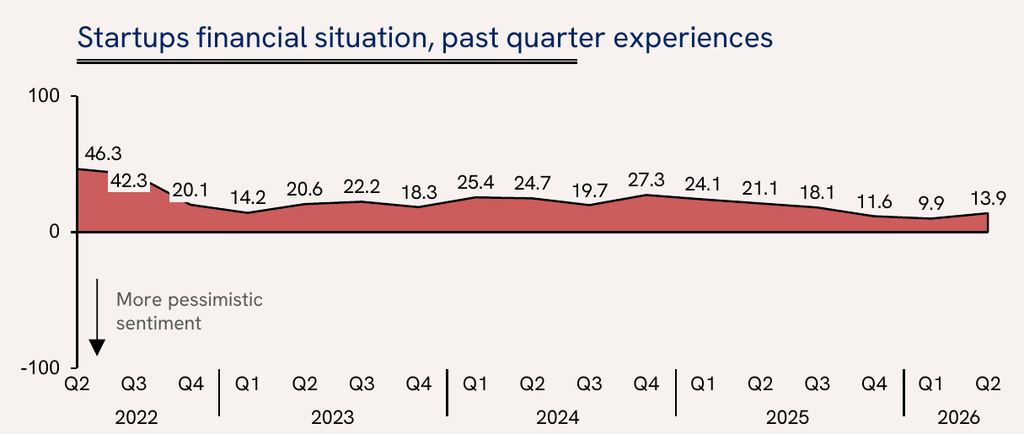
The balance score for startups’ financial position over the past three months rose from 10 to 14.
Expectations for the next three months also improved considerably, with the balance score rising from 18 to 23.
Assessments of the broader economy followed a similar trend. The balance score for the past three months rose from -17 to -8. Views of recent economic developments therefore remain negative, but are clearly more positive than at the beginning of the year.
Recruitment indicators were slightly weaker. The balance score for actual changes in headcount fell from 15 to 14, while the score for recruitment expectations over the next three months declined from 22 to 19. Both figures nevertheless remain positive, meaning that responses still lean towards increasing headcount.
“Confidence in the economy strengthened, but recruitment expectations did not follow suit. Companies therefore still appear cautious about hiring new employees. A stronger recovery in recruitment will probably require the improved economic outlook to continue for several quarters,” says Jonne Kuittinen, Deputy Managing Director of the Finnish Venture Capital Association.
Nearly four in five startups plan or are considering international expansion
This quarter’s thematic questions covered international expansion, tariffs and the recruitment of international talent.
Of the respondents, 52 per cent are actively planning to establish a permanent business presence abroad within the next 12 months, for example through a subsidiary, office or branch. A further 27 per cent are considering doing so. In total, nearly 80 per cent of respondents are either planning or considering international expansion.
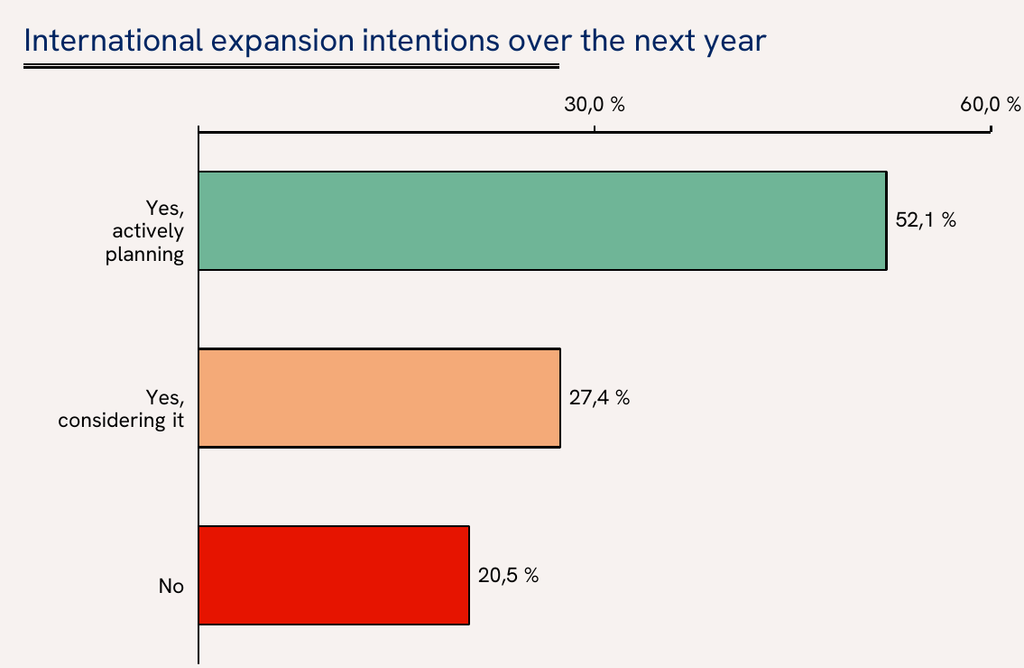
“International ambitions are generally at the heart of startups’ operations. Around 80 per cent of respondents are planning or considering expanding their presence in international markets,” says Samuli Pehkonen, CEO of the Startup Foundation.
The direct impact on startups of tariffs introduced in international trade over the past year has, at least so far, remained relatively limited. Of the respondents, 86 per cent reported that tariffs had not significantly affected their company’s sales or value chains. Eight per cent said the impact remained significant, while for 6 per cent the significant effects had already come to an end. This is an interesting result, as US trade policy and tariffs were highlighted as sources of uncertainty for growth in companies’ open-ended responses in the second quarter of 2025.
Of all respondents, 23 per cent said that Finland’s tax system had made it at least somewhat more difficult to recruit international talent. When respondents who selected “not applicable to our company” are excluded, the proportion rises to 35 per cent.
About the Startup Barometer
The Startup Barometer measures startups’ views of their own financial position, the broader economy and changes in headcount on a quarterly basis. Each round also includes questions on a selection of current topics.
The Q2/2026 survey had a total of 79 respondents, comprising 73 startups and six investors. The results of the thematic questions are based solely on responses from founders. The survey was conducted during the second quarter.
The results are presented as balance scores ranging from -100 to +100. The balance score is calculated by converting responses on a scale of 1 to 5 into values of -1, -0.5, 0, +0.5 and +1, calculating their average and multiplying it by 100. A positive balance score indicates that responses lean in a positive direction, while a negative score indicates that they lean in a negative direction.
The Startup Barometer is produced jointly by the Finnish Startup Community, the Finnish Venture Capital Association, FiBAN, Startup Finland and the Startup Foundation.