

A few weeks ago, the Finnish Startup Community (FSC), Tesi, and the Finnish Venture Capital Association (FVCA) published a new study on the Finnish startup ecosystem. The study identified over 4,200 startup-based firms in Finland, generating more than €12.5 billion in revenue and employing 47,000 people globally. In this blog post, we take a closer look at the annual earnings of startup employees in Finland.
Using linked employer-employee data from Statistics Finland, we can analyze detailed wage and capital gains data at the employee level. The data is anonymized, so we are not able to see anyone’s incomes directly, just the aggregated earnings of employees working in Finnish startups. The data only covers companies found after 2009 and the data lags a few years behind, meaning that the newest figures are from 2022. This blog post focuses on mean incomes and not the median, as using median figures would hide a few interesting observations, as we will see later.
Table 1 shows the annual total earnings of employees working in Finnish startups in 2022. The mean total income is around € 79 000. Approximately 77 percent of total income comes from earned income, and the rest from capital gains. While startup employees can have multiple earned income sources, we can probably assume that the majority of their earned income comes from the startups they work for. The mean earned income being higher than the median indicates that there are some very high earners who pull the mean up.
For capital gains, the sources of the income are likely more diversified. Capital gains include everything from the regular selling of stocks at a profit, selling apartments, to selling startup equity during funding rounds or acquisitions. This means that there is likely some baseline of capital gains that isn’t related to employee startup activities. Unsurprisingly, the median capital gain is at €0 as more than half of the employees have no capital gains.
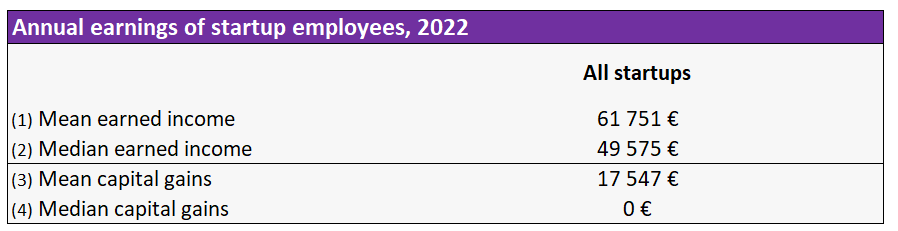
Table 1: Key figures for employees working in Finnish startups, 2022
In Figure 1, we present the annual earned incomes of people working in Finnish startups from 2010 to 2022. At the start of the observation period, the average salaries were around €40,500. From there, the salaries kept increasing at a steady pace with some variation between 2013 and 2017. For some reason, salaries were above the long-term trend, peaking at €69,400. However, in 2018, the salaries reverted towards the long-term mean. Latest figures from 2022 show average earnings of €61,800, whereas Statistics Finland shows the mean annual earnings of the private sector at €47,484. If we want to compare the earned incomes to a typical digi worker, the “computer programming, consultancy and related activities” -industry code in Statistics Finland might be our best benchmark. Their annual earnings in 2022 were approximately €60 828.1 It seems that working for startups allows employees to earn slightly more, and they often also have equity opportunities, which can make startup work very lucrative.
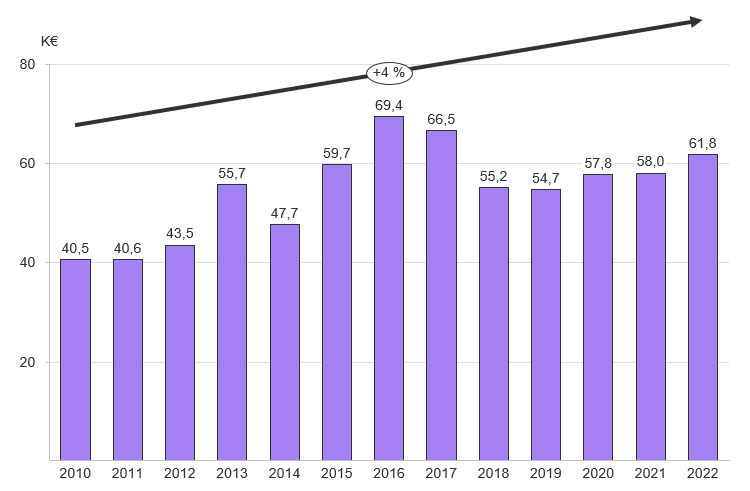
Figure 1: Mean earned income of employees working in Finnish startups 2010-2022
Figure 2, which shows the mean capital gains of employees working in Finnish startups from 2010 to 2022, reveals very large variation in annual earnings. The lowest figure is from the first year in 2010, when the mean capital gains were only €1,500. After that, mean capital gains have increased at an impressive and steady annual growth rate of 21 percent. However, that growth rate hides the wide array of annual earnings. The highest value is from 2013, when mean capital gains reached an extraordinary €184,900. Coincidentally in 2013, a now-unicorn sold a majority of its stake to a foreign company at a staggering €+1B sale.
- Statistics Finland, Structure of Earnings by Year, Sector, Sex, The Standard Industrial Classification 2008 and Information, 620. ↩︎
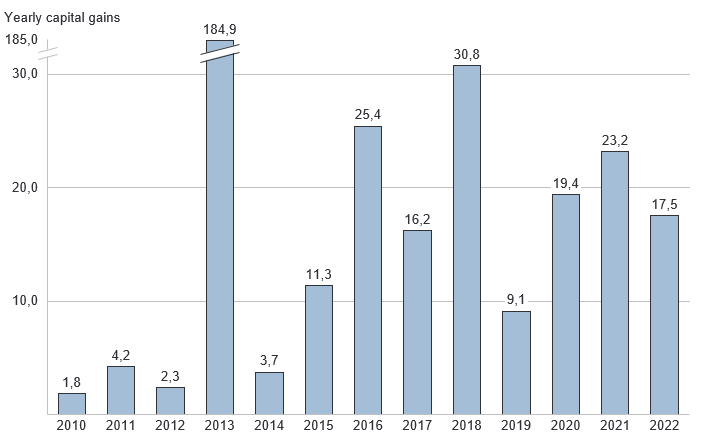
Figure 2: Mean capital gains of employees working in Finnish startups 2010-2022
Looking at historical data is interesting, but we all want to know where the earnings are heading in the future. If we could predict future total incomes and knew they would grow exponentially, wouldn’t we all rush to apply to startups or even start our own early-stage companies? Or maybe in the increasingly tough and global market, scaleups need to start paying even more to attract the best talent. In future blog posts, we’ll dive deeper into earnings at different startup stages. Stay tuned for that.
For any inquiries, feel free to contact me at Amir@startupyhteiso.com.
Amir Hassan
Economist
Finnish Startup Community